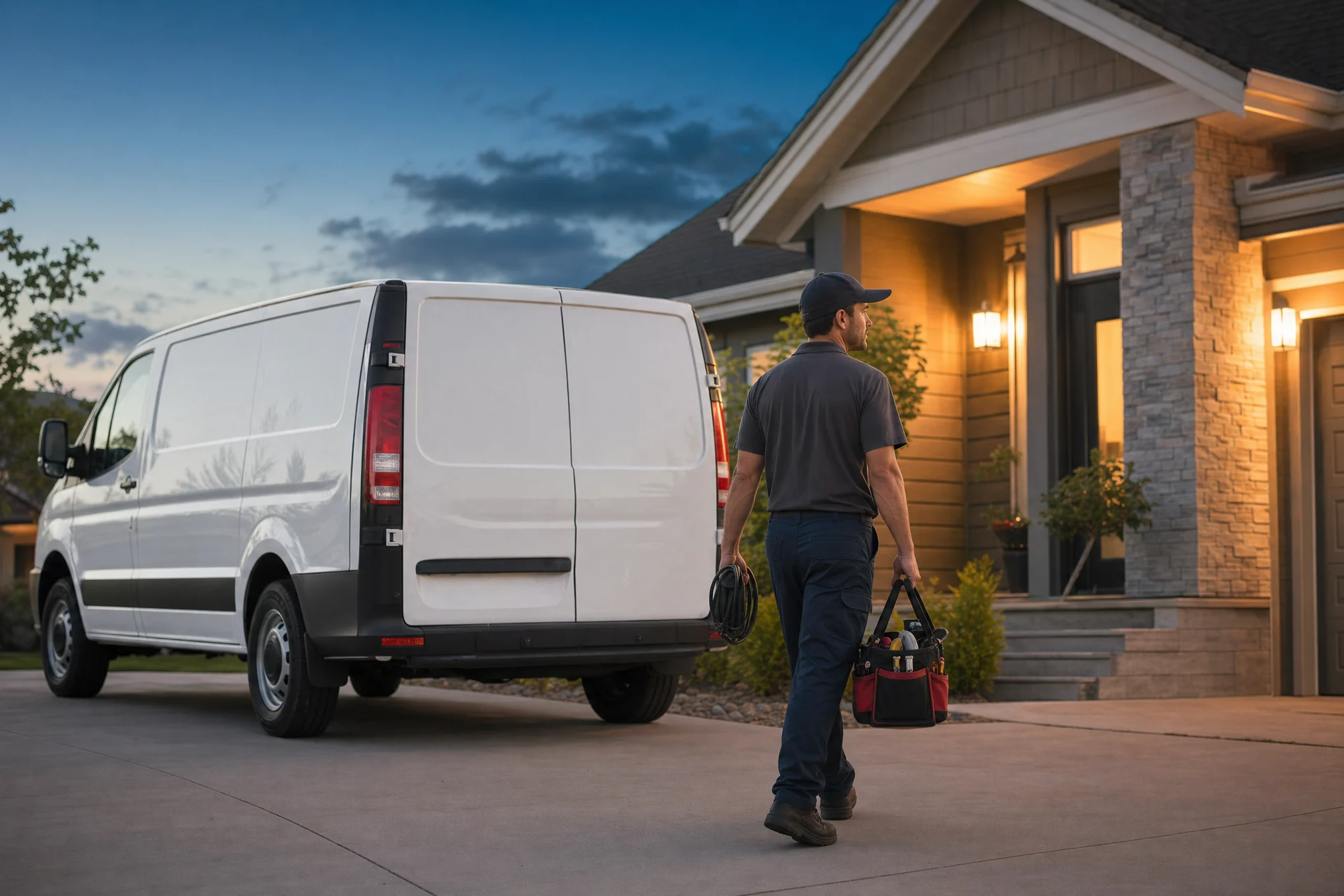
Where after-hours calls actually go, what the 9pm emergency is worth, and the three ways operators cover the night phone, with the tradeoffs of each.
It's 9:40 on a Tuesday night in July. A homeowner's AC just quit, the house is 84 degrees and climbing, and she's working down the Google results calling HVAC companies. Your office closed at 5. Her call rings four times, hits the voicemail greeting, and she hangs up and dials the next listing. That job got booked last night, just not by you.
This post is about that call: how many of them you're getting, where they go today, what each one is worth, and the three realistic ways to cover the phone after close, with the cost and the failure mode of each.
How many calls actually come in after hours?
Industry analyses of contractor call traffic generally put 25–45% of inbound volume outside 8-to-5, concentrated in the early evening and on Saturday morning. Some answering-service vendors claim 60% or more, but they tend to define "after hours" loosely enough to include lunch breaks and the entire weekend, so treat those numbers as marketing.
You don't have to trust any of it. Your phone system stamps every inbound call with a time. Pull one month of logs, count the calls outside your staffed hours, and you have your real number in about fifteen minutes. For most shops it lands somewhere between one in four and one in three.
Three things push HVAC traffic after hours specifically:
- Equipment fails under load. Air conditioners die on the hottest evenings and furnaces on the coldest nights, exactly when the office is dark.
- Homeowners call after their own workday. Even routine callers, whether tune-ups, replacement quotes, or second opinions, often can't pick up the phone until after 6.
- Weekends concentrate decisions. Saturday morning is when someone finally deals with the noise the system has been making all week.
Where do those calls go right now?
For most shops, one of three places, and none of them is tomorrow's schedule.
- Voicemail. Call-tracking studies consistently report that most missed callers hang up without leaving a message; they just dial the next result. The messages that do get left are usually returned the next morning, after the caller has met another company's technician.
- A ring-out. Lines with no after-hours routing at all just ring until the caller gives up, which doesn't take long when the next company is one tap away.
- The owner's cell. Which works, right up until you're at dinner, asleep, or on a beach, and it quietly becomes the reason you can never fully be any of those things.
The revenue math on a lost caller is the same after dark as it is at noon: the odds they'd have booked times your average ticket. We walked through the full formula in the missed-call revenue math. What changes after hours is that both of those numbers go up.
What is an evening emergency call worth?
More than almost any call you answer during the day, for three stacking reasons.
- Emergency pricing. Contractor rate cards and cost guides typically show a $150–$300 after-hours fee plus labor at roughly 1.5–2× the daytime rate, with most urgent residential jobs landing between $300 and $900 and the bad ones clearing $1,500.
- Replacement leads hiding inside repair calls. Tonight's no-cool call on a 15-year-old system is tomorrow's system-replacement quote, a job worth ten or twenty service calls. Miss the diagnostic visit and you never find out it existed.
- Caller intent. Nobody phones an HVAC company at 10pm to browse. After-hours callers have a problem right now, and they book with whoever answers first.
To put a dollar figure on your own night traffic, run the missed-call calculator twice, once with your blended average ticket and once with your emergency rate, then weight the second run by your after-hours share of calls.
What are your options for covering the night phone?
There are three rungs on the ladder. Each one beats the rung below it, and even the bottom rung beats voicemail.
Option 1: an on-call rotation
Forward the office line to a tech's cell on a rotating schedule. It's cheap, typically a stipend plus overtime on calls run, and a real human answers. The failure modes are human too: answer rates sag by the third 2am wake-up, "yeah, we can come tomorrow" is not intake, and techs quit over brutal on-call schedules. In this labor market, that's an expensive way to staff a phone.
It also caves during a surge. A heatwave night can put fifteen calls on one cell; the tech is driving to the second job while the other thirteen ring out anyway.
Option 2: an answering service
A live operator answers with your company name, takes a message, and pages your on-call tech for true emergencies. This stops the ring-out, which is genuine progress. What most services can't do is see your schedule, so the caller hangs up polite, informed, and unbooked, and the callback race starts.
That race is short. The speed-to-lead numbers are blunt: respond within about five minutes and your odds of contacting and converting the lead are many times higher; by morning the lead is functionally gone. A message taken at 9:40pm and returned at 7:30am is a competitor's job with your name on the sticky note.
Option 3: answer and book, automatically
The top rung is a system that answers the call itself, runs the intake questions, and books the job against your real schedule, with a rule that sends genuine emergencies straight to your on-call tech. That's what an AI receptionist does: it picks up in seconds whether it's the first call of the night or the fifteenth, qualifies the job, and writes it into ServiceTitan, Jobber, or Housecall Pro against live availability. If a call slips through anyway, a recapture text goes out within about 60 seconds, while the caller is still yours.
The honest framing: it doesn't replace your on-call tech, it protects them. They get woken for the burst pipe and the gas smell, not for the tune-up request that could have booked itself into Thursday at 10am.
Pull last month's call log tonight. Count the calls outside staffed hours, multiply by your booking rate and your emergency ticket, and you'll know what the night phone is worth to you within a few dollars. If it's a few hundred a month, a fair on-call stipend covers it. If it's five figures a season, and for a busy shop it usually is, the night phone deserves a system, not a volunteer.
FAQ
What percentage of HVAC calls come in after hours?
Industry analyses generally put 25–45% of inbound contractor calls outside standard business hours, clustered in the early evening and on Saturday morning. Vendor claims run higher, at 60% and up, usually by defining "after hours" broadly. Your phone system's timestamped log gives you your real number in about fifteen minutes.
How much do contractors charge for after-hours HVAC calls?
Published rate cards and cost guides typically show a $150–$300 after-hours or emergency fee, plus labor at roughly 1.5–2× the daytime rate. Most urgent residential jobs land between $300 and $900, with weekend and holiday calls pricing at the top of the range.
Do after-hours callers really not wait for a morning callback?
Emergency callers, almost never: a no-heat or no-cool homeowner works down the search results until someone answers. Speed-to-lead studies consistently show contact rates collapsing within minutes of the first attempt. If your after-hours plan ends with "we call everyone back first thing," assume the emergency calls are already gone.
Should the owner just take the after-hours calls?
It works at one-truck scale, and plenty of good companies were built that way. It doesn't survive growth: your evenings become the intake department, one phone can't absorb a surge night, and the habit is hard to unwind later. Treat it as a bridge, not a plan.